Author: Priyanka Jeph
At DrupalCon Vienna, Dries Buytaert opened his keynote with a question the room was already asking: what happens to Drupal in a world full of AI?
He answered with a live demonstration showcasing three things the initiative had built and shipped:
- Pace of delivery: pages that used to take hours now get built in minutes.
- Brand and voice control: a new Context Control Center feature lets teams set their brand voice once, and every AI agent applies it.
- Governance at scale: autonomous agents scan the site, find internal references, and propose updates.
The keynote highlighted an important aspect: humans stay in the loop and approve every change before anything goes live.
The Drupal AI Initiative arrives in Chicago with more to show
Since Vienna, 10 new organisations have joined as partners, bringing the total to 31. The initiative has now secured the equivalent of $1.5 million in combined support, comprising both direct funding and a committed contribution of 50 staff dedicated to advancing the work.
What is most exciting to me is not just what we’ve built, but how we’ve built it. With a growing group of contributors and more than $1.5 million in funding, this is now a coordinated effort to bring AI into Drupal in a way that is open, trusted, and built to last.
Dries Buytaert

A portion of funds is being invested in delivery management. The initiative conducted a formal Request for Proposal (RFP) process to appoint delivery partners responsible for coordinating work across both the innovation and product development streams. QED42 and 1xINTERNET were selected to lead the innovation and product development work streams respectively.
Progress is also visible in what has shipped since Vienna. Drupal AI 1.2.0 came first. MCP support followed. Drupal CMS 2.0 launched with Canvas as the default editing experience.
Drupal AI 1.3.0 introduced governance controls, editorial workflows, and production visibility for organisations running AI seriously.
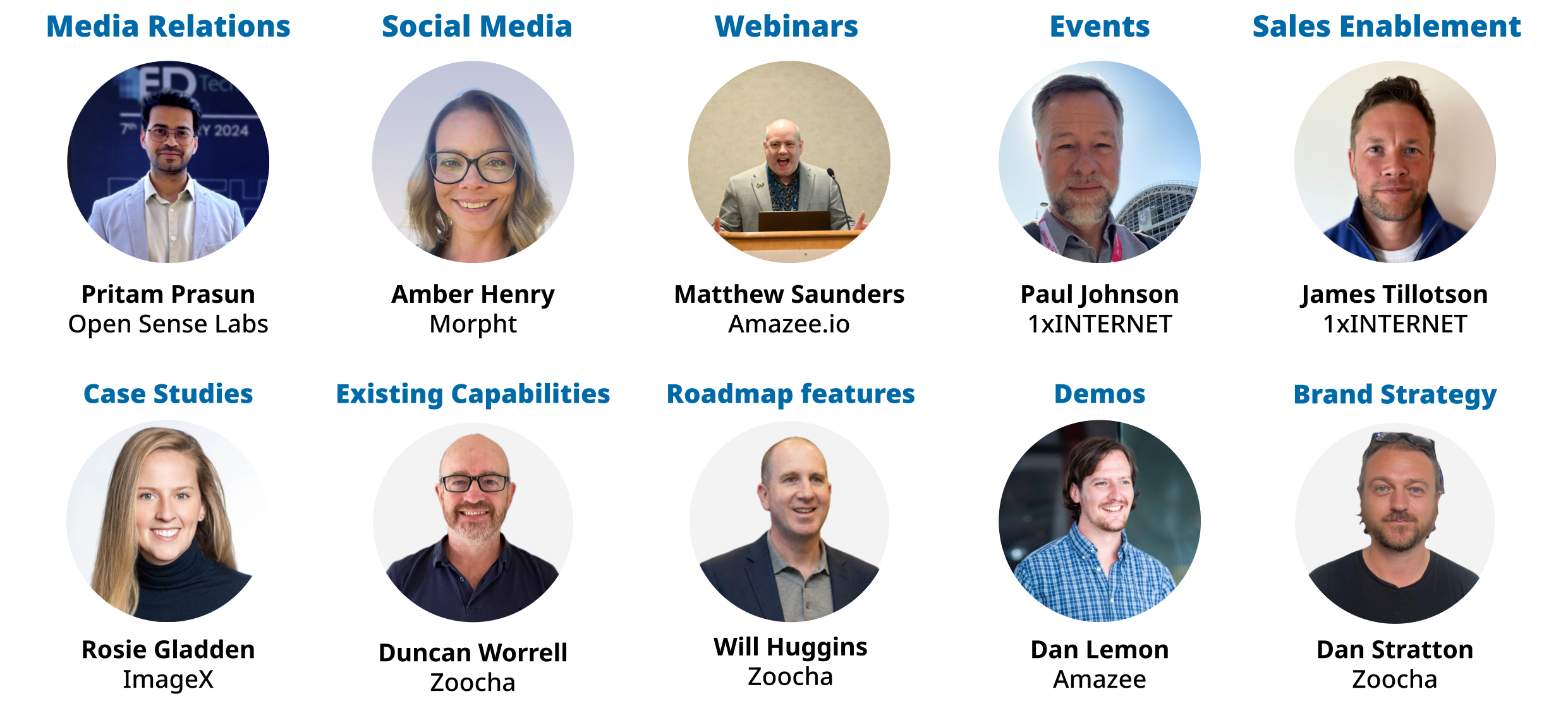
Dedicated AI Marketing Leads Appointed
With the increased momentum in development it has been essential to scale marketing capacity. Paul Johnson announced the appointment of 10 marketing leads. Each will specialise on delivering specific key elements of the marketing strategy.

- Media Relations: Pritam Prasun, Open Sense Labs
- Social Media: Amber Henry, Morpht
- Webinars: Matthew Saunders, Amazee.io
- Events: Paul Johnson, 1xINTERNET
- Sales Enablement: James Tillotson, 1xINTERNET
- Case Studies: Rosie Gladden, ImageX
- Existing Capabilities: Duncan Worrell, Zoocha
- Upcoming Roadmap Capabilities: Will Huggins, Zoocha
- Demos: Dan Lemon
- Brand and Design Strategy: Dan Stratton, Zoocha
The initiative has been successful in bringing Drupal to external audiences across multiple global locations including Oaisys Conference in Pune, Drupal AI Summit Paris, DrupalCon Nara in Japan, the European Commission hackathon, and a growing number of workshops and meetups kept the work visible across contributors, regions, and practical discussions.
In the near future we have Drupal AI Summit New York City, May 14th, intended to bring the same conversation to enterprise leaders and practitioners. The team will exhibit at The AI Summit London as part of London Tech week which sees more than 45 000 attendees from around 90 countries across multiple days of programming.
In Chicago, that momentum was particularly easy to see
Drupal AI has moved beyond being merely a set of separate features. It is now realised through connected capabilities. Content, context, and editorial decisions begin to work together inside the same system.
Early in his Keynote at DrupalCon Chicago, Dries Buytaert widened the conversation. He said AI is now affecting three parts of Drupal at once. The product. The agencies around it. The open source community behind both.
That makes Chicago feel larger for Drupal AI. The releases matter. But they now sit inside a broader shift already affecting how Drupal is built, funded, and extended.

Photo: Paul Johnson
What Chicago made clear
Drupal AI is being deliberately designed as a native part of the platform, embedded within how Drupal operates rather than introduced as an additional layer on top. In doing so, AI becomes more useful as it works inside systems that already carry structure and context.
That is why Canvas AI mattered in Chicago. The demonstration was less about generating a page quickly and more about showing how content could move through Drupal while keeping structure, linking, and reusable patterns intact.
The same logic appeared when Dries returned to the Context Control Center, first introduced in Vienna. If AI is expected to assist meaningfully, organisational knowledge cannot remain outside the system. Brand rules, editorial priorities, and internal decisions need to stay close to where content is shaped.
That is what Chicago makes clearer: Drupal AI is being positioned around context as much as capability.
What this means for agencies
One of the clearest shifts in Chicago came when the conversation moved from product to agency work.
AI is rapidly reducing the cost of production, but that does not reduce the need for judgment. It changes where the value sits.
Dries brought in Aidan Foster's observation directly: the bottleneck is no longer making things. The harder part is deciding what should be made, how it should work, and what quality still means when output becomes easier to create.
That is why agencies remain part of the same conversation. As production speeds up, strategy, interpretation, and institutional understanding begin to matter more, not less.
In that sense, as production becomes easier, the harder part shifts elsewhere. Context, judgment, and internal knowledge begin to matter more, which is exactly where Drupal is placing more emphasis.
What do we want to accomplish by Rotterdam?
The initiative now feels materially different from where it stood even a few months ago. Prototypes are moving into alpha and beta stages, stable releases are approaching, and coordination across teams is visibly stronger. More people are involved, and the relationship between Drupal CMS, Drupal AI, and core has become easier to follow.
That shift matters because the work no longer reads as parallel experimentation. Product releases, editorial workflows, and context systems are beginning to move toward the same operating idea: AI becomes more useful when it works inside structures organisations already trust.

Photo: Jeremy Chinquist (jjchinquist)
The roadmap shown in Chicago reinforces that direction. For organisations already evaluating open source AI for digital platforms, Drupal AI now presents a clearer path to adoption.
For a complete view of how Drupal AI is framing that next stage, Dries Buytaert’s full DriesNote from Chicago is worth watching.