"We've had to pass on those costs to consumers"
Reading
The plan for an Indigenous Voice to parliament was a result of the government-funded push for constitutional recognition that would deny any real rights, argues Paddy Gibson
The post How the plan for a token advisory Voice was hatched appeared first on Solidarity Online.
We’re all familiar with the myth: Prometheus steals fire from the Gods and gives it to man and is cruelly punished for it.
I’ve considered writing a story in which Prometheus is freed by Zeus and returned to Earth to judge the results of his action.
After East Palestine, as in 2005, harmful chemical releases are unlikely to affect the rail company’s stock price or bottom line.
The post Norfolk Southern Argued Against “Emotional Evocations of ‘Deadly Chemicals’” After 2005 Derailment appeared first on The Intercept.
Monetary policy has been historically concerned with controlling inflation, using the interest rate as its main tool. However, such policies are not gender- or race-neutral.
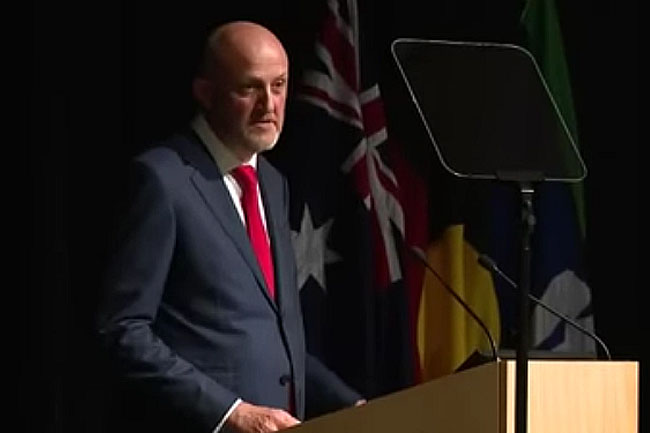 ASIO head Mike Burgess has loudly joined the anti-China campaign, acting to intimidate journalists and anyone seeking positive relations with China. read now...
Right-wing Christian blogger and media figure Rod Dreher has moved to Hungary, where he continues...
It’s a tough contest these days, but Ted Cruz retains the title of most unctuous creep in the Republican party
“New editions of [Roald Dahl’s] children’s classics, including ‘Charlie and the Chocolate Factory,’ have been altered to eliminate words deemed inappropriate. A backlash ensued.” — New York Times
- - -
Dear Fat-Headed Roald Dahl-Censoring Fuckers,
You’re censors. You’re not editors, and you’re not readers. You’re censors. You are exactly what Orwell warned us about.
So fuck you.
Without the author’s consent, you are changing and omitting words that the author wrote. That makes you a censor. An agent of censorship. Only fascists censor books.
What you’re doing is crazy. See? We said it. Crazy. Crazy. Crazy.
You will not take words from the human race. You have no fucking right.
When you censor, you condescend. Fat people call themselves fat because they are not ashamed of themselves. But you are ashamed of us. You think being overweight is something to be ashamed of, so you erase this word, and you erase all fat people. Well, fuck you.
Fascinating: Personally, I’m not into the ancestry craze. I don’t care much about that stuff. I’m old fashioned. But it is fascinating to see how much an immigrant country like the United States has evolved in this way.
Ohio Gov. Mike DeWine’s track record and rail company links raise questions about his ability to hold the rail giant accountable for the derailment disaster.
DrupalCon Pittsburgh 2023 is approaching fast! If you haven’t been to a DrupalCon before, Pittsburgh will be a great opportunity to experience the event. You will have the opportunity to connect with other developers, designers, content creators, and business leaders who use Drupal to build websites and digital experiences. DrupalCon offers a range of sessions, including hands-on workshops, technical talks, business case studies, panel discussions, and Birds of a Feather sessions providing attendees with the latest information and best practices for using Drupal to build some of the world's most innovative digital experiences.
~ Today's Water Cooler ~
In his newsletter today, Dan Pfeiffer notes the contrast between President Biden and Ron DeSantis on President’s Day, when Biden went to Kiev and DeSantis went to Fox: On the other side was Florida Governor and putative Presidential candidate Ron DeSantis appearing on Fox and Friends to slam President Biden for his offering “blank checks to Ukraine.” DeSantis told the hosts: This moment was revelatory in two key ways. First, it demonstrated the challenge for Republicans trying to run against the Fox News caricature of “Sleepy Joe.” It’s hard to overstate the stature gap between a commander in chief astride the world stage and a Governor chopping it up Steve Doocy on a cable morning show. You can’t credibly argue that Biden isn’t up to the job, when he is blazoned across every screen doing the job in historically courageous ways. Presidents usually win reelection in part because they have the consistent opportunity to create made-for-media moments that dominate the national conversation.
Retiring Sen. Pat Toomey is joining Apollo Global Management after helping enrich the private equity industry during his time in Congress
Saba Salman reports on the yet-to-be-published findings of a national commission examining the impact of the pandemic, disablism and systemic racism
Testimony of Professor Jeffrey D. Sachs University Professor at Columbia University UN Security Council Session on the Nord Stream Pipeline Destruction February 21, 2023 As Delivered My name is Jeffrey D. Sachs. I am University Professor at Columbia University. I am a specialist in the global economy, including global trade, finance, infrastructure, and economic statecraft. I Continue reading »
A key feature of following the news and reporting from mainstream Western media today is the relentless China bashing. It is off the charts, tiring, and often regurgitated trivia or fabricated stories with no evidence to support callous statements about the country, demonstrating a deep lack of understanding. But it continues to be churned out Continue reading »
The anniversary of the war in Ukraine was accompanied by high level visits to both Moscow and Kviv. One visit appears to offer at least a glimmer of hope and the other presents a picture of more destruction, suffering and death. Chinese foreign minister Wang’s meeting with his Russian counterpart, Sergei Lavrov and president Putin Continue reading »
Many government reviews or reports are leaked in part for reasons of bureaucratic politics and the Defence Strategic Review (DSR) is no exception. Given the probability that these emanations are accurate, two reactions are also highly likely. The first is that knowledgeable and engaged citizens are likely to suffer from hypoxia in the realisation that Continue reading »
While Governments often promote consensus views that disguise racism, domination of the less fortunate and an ages old acceptance that violence can sustain dominant interests, recent articles in P&I have begun to challenge this conformity. A history of social theory records distinct ways of encouraging citizens to think, either by endorsing consensus views of how Continue reading »
Despite the grilling he got in two separate parliamentary hearings last week, Reserve Bank governor Dr Philip Lowe’s explanation of why he was preparing mortgage borrowers for yet further interest rate increases didn’t quite add up. There seemed to be something he wasn’t telling us – and I think I know what it was. We Continue reading »